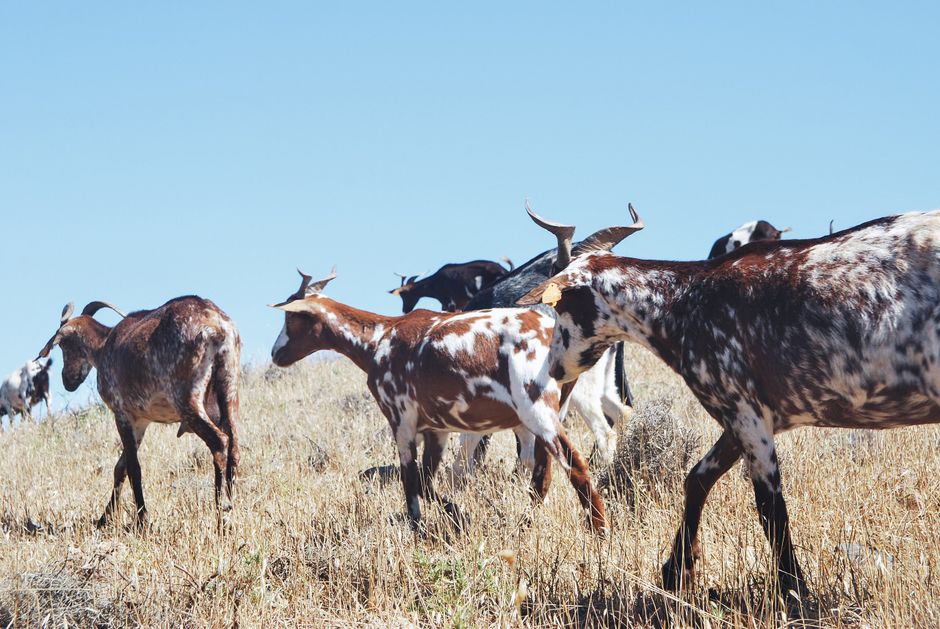
As wildfires continue to ravage parts of France and Spain, authorities are turning to an unlikely ally: goats and sheep. Amidst the struggle to contain blazes, the European Commission has officially endorsed the use of grazing animals to create firebreaks, a low-tech but potentially effective strategy.
The idea of deploying livestock to clear underbrush gained formal backing earlier this year when the European Commission and the top farmers' lobby recognized grazing as a climate adaptation tool. Researchers have credited livestock with restraining the spread of fires in Spain's Extremadura, Andalusia and Valencia regions.
The solution, however, faces significant hurdles. Shepherding is often unprofitable and relies on government subsidies. José María Castilla of the Spanish farm lobby ASAJA said getting young people into goat herding is “impossible” without making it profitable. He argued for a dedicated fund for shepherds, likening it to the EU’s coronavirus response in 2020.
Despite EU rhetoric, critics say Brussels has done little to implement the grazing practice. The European Academies’ Science Advisory Council criticized an “overwhelming focus on fire suppression and emergency response” rather than systemic solutions, recommending livestock grazing. An EU Commission spokesperson, Louise Bogey, countered that the farm budget already supports fire management, including grazing and forest roads as firebreaks. From 2028, the Commission plans a “transition payment” for farmers moving into shepherding under the next Common Agricultural Policy, and is working on a financial scheme with the European Investment Bank.
In practice, some initiatives show promise. Catalonia’s Fire Flocks project mixes fire prevention with commercial farming: herders graze animals in high-risk woodlands identified by firefighters, and sell cheese and yogurt with a special label. In Couso, Spain, there is a two-month waiting list to buy meat from cows used for fire prevention, priced at €10 per kilo. French farmers near Bordeaux have joined firefighters, filling their slurry tanks with water.
The underlying problem, experts say, is that abandoned farmland grows over with shrubs or is replaced by homogenous forests that burn easily. Copernicus confirmed that the largest fires are in areas where forests and shrubland form large, connected landscapes. Joe McNorton of Copernicus noted that under severe conditions, embers can cross gaps, limiting the effectiveness of firebreaks. Urbano Fra Paleo of Extremadura University argued that decision-makers focus on managing fires rather than managing landscapes.