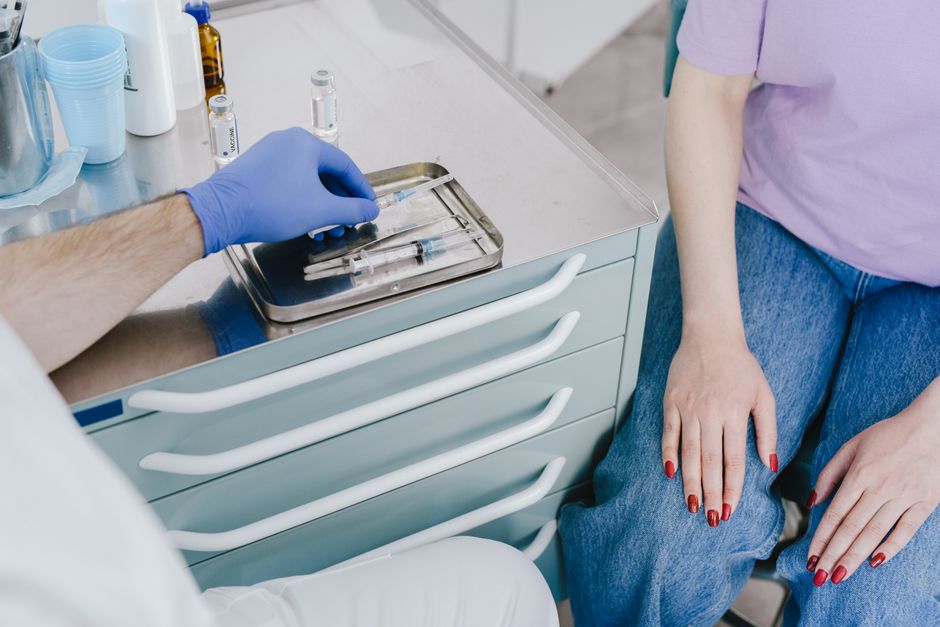
US President Donald Trump repeatedly pressed Health and Human Services (HHS) Secretary Robert F. Kennedy Jr. to slash childhood vaccine recommendations, according to a report. Trump, who has a long history of promoting a link between vaccines and autism, pushed Kennedy to take action, including at a lunch in May at a northern Virginia golf course where he asked Kennedy why he had not done more to investigate the supposed vaccine-autism connection, accusing him of having the "yips."
Trump's Long-Held Views on Vaccines and Autism
When I was growing up, autism wasn't really a factor... my theory is the shots.
In 2014, Trump wrote: "If I were President I would push for proper vaccinations but would not allow one time massive shots that a small child cannot take - AUTISM." Trump has expressed interest in splitting the MMR vaccine into separate shots, though scientists say there is no reason to do so; multiple studies, including a 2019 study of more than 600,000 children, found no connection between MMR and autism. Broader scientific consensus holds that no evidence vaccines cause autism. Decades of research point overwhelmingly to genetics.
Autism prevalence in 2022, up from 1 in 150 in 2000.
Administration Actions and Internal Pushback
In January, Kennedy proposed cutting the number of recommended childhood vaccines from 17 to 11. A judge blocked that move in March. Trump signed an executive order directing HHS to reduce the number of recommended childhood vaccines. White House aides urged Kennedy to tone down his vaccine rhetoric and to focus on removing dyes from food regarding vaccines. Trump issued a memo directing HHS to align with 'peer' nations on vaccination recommendations. A federal judge ordered a halt to vaccine changes following a lawsuit from the American Academy of Pediatrics and also paused the work of the Advisory Committee on Immunization Practices (ACIP), which was illegally formed under Kennedy.
The CDC rewrote its vaccine-autism guidance, trading its longstanding statement that vaccines do not cause autism for language claiming that current science has not definitively ruled out a connection. Kennedy sought to divert $5bn in funding from the National Institutes of Health (NIH) budget toward research on vaccines and autism. Martin Kulldorff, a Harvard epidemiologist working at HHS, is leading a series of vaccine studies.
Trusted health information from Kennedy, according to Trump pollster Tony Fabrizio's findings.
White House spokesperson Kush Desai said people worried about skyrocketing autism rates have long been ignored if not mocked. HHS spokesperson Emily Hilliard said Kennedy and Trump are aligned in their commitment to confront the chronic disease epidemic affecting America's children. Tony Fabrizio concluded in a December memo that 'skepticism toward vaccine requirements is politically risky for both parties.' The White House put a hold on vaccine changes after polling indicated it was a losing issue in the midterm elections. Susie Wiles gave HHS the deadline of New Year's Eve to make vaccine changes.
Some administration officials see Kennedy as an 'ideas guy', while Trump has expanded the portfolio of Mehmet Oz; some believe Oz may replace Kennedy. Kennedy wants to remain at his post. Paul Offit, director of the Vaccine Education Center and infectious diseases physician at Children's Hospital of Philadelphia, said Trump has been anti-vaccine at least since 2015. Offit said measles has surged to its highest rate in 30 years, and the US has suffered a rise in deaths from whooping cough, flu, and tetanus. Offit said 'Trump has become the president of Measles Land,' and called Trump the most powerful anti-vaxxer in the world. Offit added it is unlikely Trump will fire Kennedy despite rumors, and said the abrupt rise of measles and other deadly diseases are more likely to be Trump's legacy than advances in understanding autism.