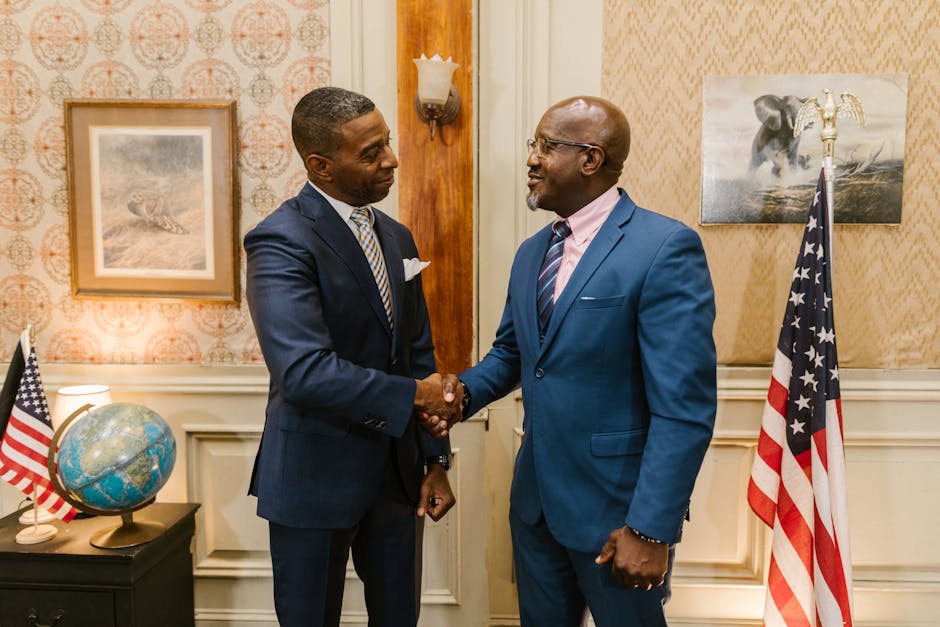
US Vice President JD Vance met Saudi Defense Minister Prince Khalid bin Salman in Washington on Wednesday, following joint US-Saudi precision strikes against targets linked to Iranian-aligned groups in Iraq.
The strikes were in response to more than 30 drone attacks directed by Iran's Islamic Revolutionary Guard Corps (IRGC) against targets in Saudi Arabia over the previous 72 hours, according to a source. Saudi Arabia stated the strikes were conducted in self-defense under Article 51 of the UN Charter and warned it would take further military action if Iran-backed groups carried out additional attacks.
The Popular Mobilization Forces (PMF), an Iran-backed coalition in Iraq, confirmed that several of its headquarters were hit, killing at least 20 members and wounding 32.
Iran condemned the strikes as a violation of Iraq's sovereignty. The meeting, originally planned for the previous week, was delayed due to the strikes. It was short, and Prince Khalid bin Salman returned to Saudi Arabia immediately afterward. No official statement was made by either side after the meeting.
According to a source, Saudi Arabia still favors de-escalation with Iran despite the strikes. The objective of the meeting was to deliver a message from Crown Prince Mohammed bin Salman (MBS) regarding the war with Iran and the regional situation. Prince Khalid bin Salman, the crown prince's brother and close confidant, conveyed that the attacks by pro-Iranian Iraqi militias on Saudi infrastructure crossed a red line, necessitating a response, but that the kingdom is not pro-escalation.
The Crown Prince wanted to convey that the strikes in Iraq do not mean Saudi Arabia is pro-escalation but rather that it is ready to defend itself if needed.
The meeting came a day after Israeli Prime Minister Benjamin Netanyahu met with US President Donald Trump. An Israeli official said Netanyahu discussed the situation in Saudi Arabia "in the context of regional challenges." According to a source, Prince Khalid bin Salman told Vance that Netanyahu is pushing for escalation with Iran while Saudi Arabia wants de-escalation as a more fruitful path. The vice president's office declined to comment on the meeting.
Two weeks earlier, President Trump gave Crown Prince Mohammed bin Salman his support for military action against the Iran-backed Houthi movement in Yemen. The Houthis retaliated by threatening a naval blockade on Saudi ports and conducting several attacks on Saudi ships in the Red Sea. According to a source, Saudi Arabia had to deliver a strong response in Iraq to send a message to the Houthis and deter further attacks. However, Prince Khalid bin Salman told Vance that the kingdom can manage the situation with the Houthis and does not need US involvement at this point. Saudi Arabia is also negotiating with the Houthis.