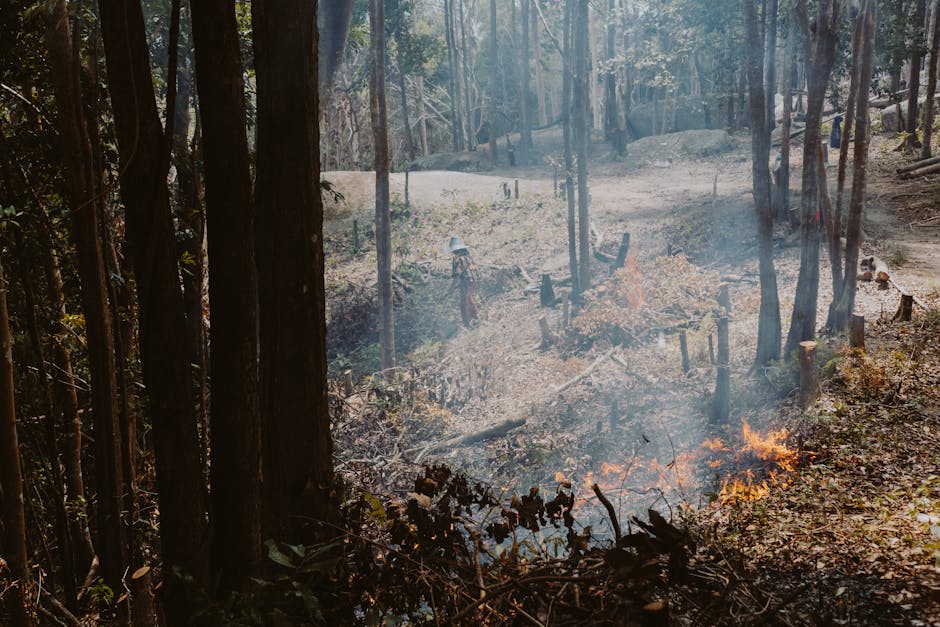
A wildfire broke out on the Greek island of Paros, with conflicting reports about its start time: some sources say it began at midday Tuesday in the Kampi area near the landfill, while others state it started in the afternoon. The fire reignited overnight and spread across southern Paros, authorities said.
Evacuation orders were issued for ten areas on Paros, though some reports mention nine villages. Strong northerly winds of 6–7 on the Beaufort scale are causing spot fires, according to some accounts, while others note strong winds without specifying the scale. The fire has two fronts: one heading toward Trypiti and another toward Faragas beach.
In addition, two aircraft and five helicopters are operating from the air. An additional 20 firefighters with eight vehicles are due to arrive by ferry from Rafina. Paros deputy mayor Christos Giourtzidis said some residents refused to leave their animals, requiring forcible evacuation. At least two livestock facilities were destroyed.
Winds are expected to strengthen further, with gusts locally reaching 8 Beaufort on Wednesday, according to some sources, though others warn of worsening conditions without specifying the scale. Paros is classified as risk category 3 (high danger) on Wednesday. The Cyclades Arson Crime Investigation Unit has been activated to investigate the cause.
Power cuts affected a large part of southern Paros, and the fire is burning in ravines and inaccessible areas. Volunteers, two water tankers, and heavy machinery from the Municipality of Paros are assisting. Ground forces have been reinforced by firefighters and vehicles from Attica, Syros, Naxos, and Piraeus, though some accounts only mention special units from Athens. A total of 16 fire engines and four forest commando teams from the 1st Special Forest Operations Unit are participating. Overall coordination has been assumed by the deputy chief of the Fire Service.
The wildfire on Paros was ongoing on Wednesday, July 29. In France, a forest fire west of Bordeaux, the largest since 1949, forced over 220,000 people to evacuate and destroyed 240 homes. A 50-meter wide, 25-kilometer long firebreak was created with civilian volunteers on the Cap Ferret peninsula. In Spain, about 60,000 people were evacuated and about 77,000 hectares burned. EU crisis management commissioner Hadja Lahbib warned that extreme conditions threaten France, the Iberian Peninsula, Hungary, Slovakia, and the Czech Republic.
Temperatures in Europe reached up to 47°C during the wildfire period. In a separate incident, approximately 4,000 tourists were evacuated from a French coastal resort. Spanish Prime Minister Pedro Sánchez called the fires 'the most painful expression of the climate crisis,' while French President Emmanuel Macron said 'Difficult weeks ahead and we must hold on.'