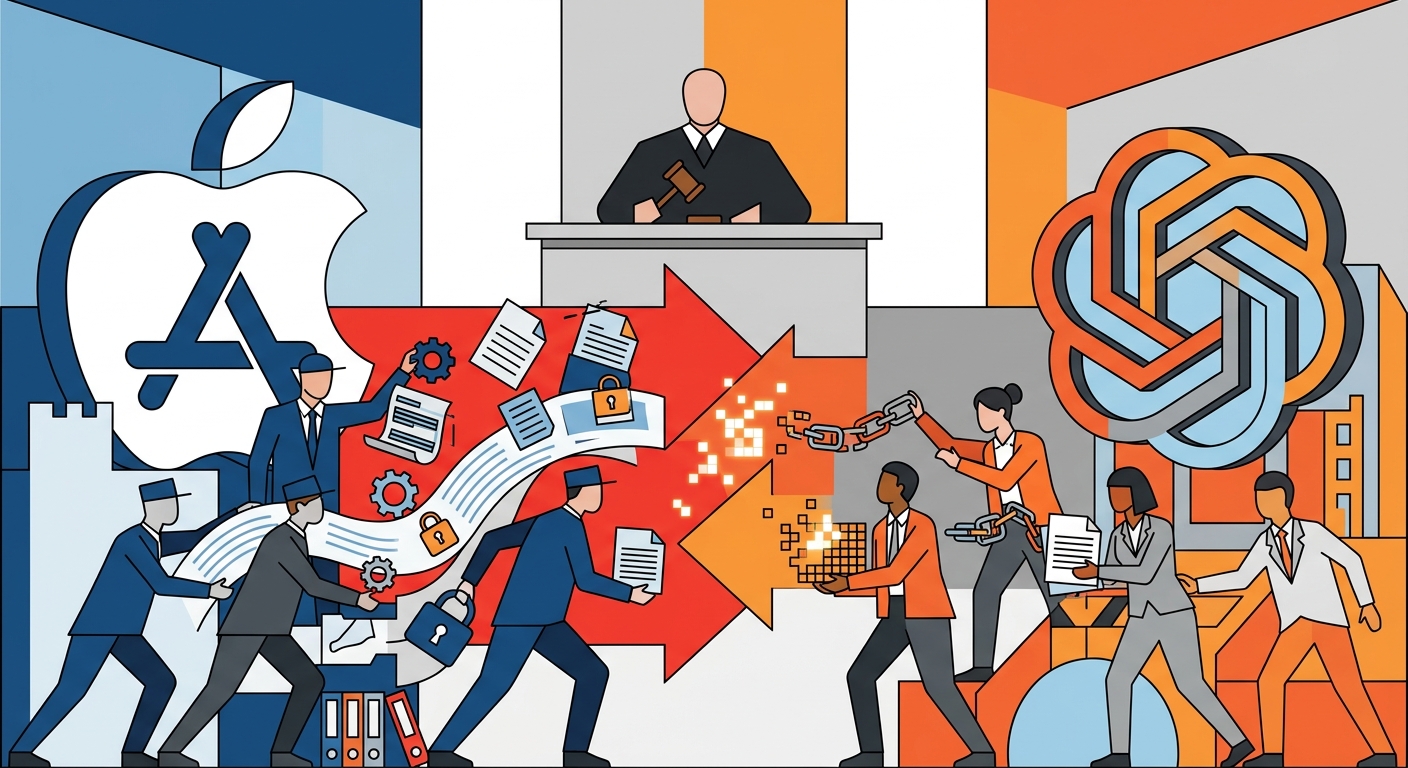
The lawsuit claims OpenAI poached former Apple employees to obtain confidential information about unannounced products.
Talivio News · Global2 min read
Aa
T
Talivio News (AI illüstrasyon)
Apple has filed a lawsuit against OpenAI in the US District Court for the Northern District of California, accusing the company of illegally obtaining trade secrets to use in its hardware projects. The lawsuit alleges that OpenAI systematically targeted former Apple employees to leak confidential information about unannounced products and technologies.
According to the lawsuit, Apple claims that OpenAI's hiring of its former employees was a systematic strategy to steal trade secrets. OpenAI, however, disputes these allegations, denying any interest in Apple's secrets and calling the lawsuit baseless.
Two former Apple employees are central to the case. Tang Yew Tan, Apple's former vice president of product design for iPhone and Apple Watch, joined OpenAI as Hardware Director. Chang Liu, a former senior system electrical engineer, allegedly failed to return his company laptop and retained downloaded technical documents when moving to OpenAI. OpenAI has corrected claims about its employees, indicating a conflict with Apple's allegations.
In its legal filings, Apple requested a preliminary injunction to bar OpenAI and the two former employees from accessing, acquiring, using, or disclosing its confidential information. Apple also filed a motion seeking expedited discovery, requesting depositions from Chang Liu, Tang Yew Tan, OpenAI employee Yu-Ting Peng, an unnamed OpenAI employee, and representatives of OpenAI and io Products.
Apple will be irreparably harmed absent a preliminary injunction.
Apple stated in a court filing that it will be irreparably harmed absent a preliminary injunction. The lawsuit comes after OpenAI reportedly acquired io (also known as io Products), a startup founded by former Apple chief designer Jony Ive, for $6.5 billion.
$6.5 billion
Reported price OpenAI paid to acquire io, a startup founded by former Apple chief designer Jony Ive.
OpenAI has responded publicly. On its official X account, it stated, 'We are not interested in other companies' trade secrets.' In a blogpost, OpenAI said Apple's request is 'both based on false information and completely unnecessary.'
This lawsuit was filed after OpenAI successfully fended off a legal challenge from Elon Musk's xAI, according to reports.
Updates
Apple has expanded its legal action by naming OpenAI's commercial arm, io Products, as a defendant and requested the court to immediately halt OpenAI's use of trade secrets and mandate the return of all undisclosed documents. The litigation includes specific allegations that OpenAI misled business partners regarding permissions for Apple's proprietary manufacturing techniques and that former employee Tang Yew Tan, who spent 24 years at Apple, requested confidential project and hardware data. OpenAI has responded by calling the allegations 'careless, aggressive and personal,' asserting that any data access was a 'residual access' issue caused by Apple's failure to manage departing employees'-
Apple has expanded its legal action to include OpenAI's commercial arm, io Products, and requested an immediate injunction to stop the use of its trade secrets and the return of all undisclosed documents. The lawsuit further alleges that OpenAI falsely claimed to business partners that it had obtained necessary permissions to use Apple's proprietary manufacturing techniques. Additionally, the legal battle coincides with OpenAI's accelerated preparations to produce its first potential hardware device, such as an AI agent-based smartphone.
Apple has requested an immediate injunction to stop OpenAI's use of its trade secrets and the return of all undisclosed documents, specifically alleging that OpenAI claimed to have obtained necessary permissions to use Apple's proprietary manufacturing techniques. In its defense, OpenAI described the allegations as 'careless, aggressive and personal,' arguing that Apple mismanaged its communication channels and failed to properly control system access for departing employees. Additionally, io Products has been named as a defendant in the lawsuit, which coincides with reports that OpenAI is accelerating preparations for its first hardware device.
Apple has expanded its lawsuit to include OpenAI's commercial arm, io Products, and is seeking an immediate injunction to stop the use of its trade secrets along with the return of all undisclosed documents. The allegations further claim that OpenAI falsely told business partners it had obtained Apple's permission to use its proprietary manufacturing techniques, while OpenAI has dismissed the claims as 'careless, aggressive and personal.' Additionally, it is noted that the legal battle coincides with OpenAI's accelerated preparations for its own hardware device, potentially threatening the market dominance of the iPhone.
Apple has expanded its legal claims, alleging that OpenAI misled business partners by claiming to have necessary permissions to use Apple's proprietary manufacturing techniques. The lawsuit, which now includes OpenAI's commercial arm io Products as a defendant, further accuses former engineer Chang Liu of using an authentication vulnerability to access cloud storage and instructing colleagues on how to download confidential files while avoiding security detection. In response, OpenAI has labeled the allegations as 'careless, aggressive and personal,' asserting that Apple mismanaged its communications by emailing the wrong recipients and failing to secure departing employees' system access.
Apple alleges that OpenAI misled partners by claiming to have obtained permission to use proprietary manufacturing techniques, and the lawsuit now specifically names OpenAI's commercial arm, io Products, as a defendant. The legal action includes requests for an immediate injunction against the use of trade secrets, the return of undisclosed documents, and the preservation of evidence. Furthermore, Apple claims former engineer Chang Liu utilized an authentication vulnerability to access cloud-based storage weeks after his departure and instructed colleagues on how to bypass security teams.
Apple has expanded its legal action to include OpenAI's commercial arm, io Products, as a defendant and is seeking a preliminary injunction to stop the use of its trade secrets and demand the return of undisclosed documents. The lawsuit further alleges that former engineer Chang Liu used an authentication vulnerability to access Apple's cloud storage after his departure to download dozens of confidential files. In response, OpenAI published a blog post titled 'Apple is getting this wrong,' labeling the allegations as 'careless, aggressive and personal' and claiming that Apple's legal team mismanaged communications by emailing the wrong person due to a confusion between two Asian last names.
Apple has expanded its legal action to include OpenAI's commercial arm, io Products, as a defendant and is seeking an immediate injunction to stop the use of its trade secrets and the return of all undisclosed documents. The lawsuit further alleges that former engineer Chang Liu used an authentication vulnerability to access Apple's cloud storage after his departure and instructed colleagues on how to download confidential files while avoiding security detection. Meanwhile, OpenAI has published a blog post characterizing the legal action as 'careless, aggressive and personal,' claiming that Apple mismanaged its communications by sending initial correspondence to the wrong person due to a mix
Apple's lawsuit has named OpenAI's commercial arm, io Products, as a defendant and includes allegations that former engineer Chang Liu used an authentication vulnerability to access cloud storage and instructed a colleague on how to download confidential files while avoiding security detection. In response, OpenAI published a blog post titled 'Apple is getting this wrong,' claiming the legal action is baseless and noting that Apple's lawyers allegedly sent initial communications to the wrong person due to a confusion between two Asian last names. While Apple seeks an immediate injunction to stop the use of its trade secrets, OpenAI maintains that any data access was a result of Apple's own's
Apple has expanded its legal action to include OpenAI's commercial arm, io Products, and is seeking an immediate injunction to stop the use of trade secrets and ensure the return of undisclosed documents. The lawsuit further alleges that former engineer Chang Liu used an authentication vulnerability to access Apple's cloud storage after his departure and coached a colleague on how to download confidential files while avoiding security detection. In response, OpenAI published a blog post characterizing the allegations as 'careless, aggressive and personal,' claiming that Apple's legal team misdirected initial communications due to confusing two Asian last names.
Apple has expanded its legal action by including OpenAI's commercial arm, io Products, as a defendant and is seeking an immediate injunction to stop the use of its trade secrets. The lawsuit further alleges that former engineer Chang Liu used an authentication vulnerability to access Apple's cloud storage post-employment and instructed colleagues on how to download confidential files while avoiding security detection. In response, OpenAI published a blog post characterizing the allegations as 'careless, aggressive and personal,' claiming that Apple mismanaged its communications by emailing the wrong person due to a confusion between two Asian last names.
Apple's lawsuit now includes OpenAI's commercial arm, io Products, as a defendant and requests a court order to immediately stop the use of trade secrets and preserve all evidence. Additional allegations claim that former engineer Chang Liu used an authentication vulnerability to access Apple's cloud storage after his departure and instructed a colleague on how to download confidential files while avoiding security detection. Meanwhile, OpenAI has released a blog post denying the claims, asserting that Apple mismanaged its communications by emailing the wrong person and characterizing the legal action as 'careless, aggressive and personal.'
Apple has expanded its legal action to include OpenAI's foundation and its commercial arm, io Products, as defendants while seeking a preliminary injunction to stop the use of its trade secrets. The lawsuit specifically targets former employees Tang Yew Tan and Chang Liu, alleging that Liu used an authentication vulnerability to access cloud storage and instructed colleagues on how to download confidential files. OpenAI has responded via a blog post, dismissing the allegations as 'careless, aggressive and personal' and claiming that Apple's legal team mismanaged communications by emailing the wrong person due to confused Asian last names.
Apple has requested a preliminary injunction to stop OpenAI's use of trade secrets and the return of all undisclosed documents, while specifically naming OpenAI's foundation and commercial arm, io Products, as defendants. The allegations further specify that former employee Chang Liu allegedly used an authentication vulnerability to access cloud storage after his departure to download confidential files. Additionally, Apple claims that former Hardware Director Tang Yew Tan, who served at Apple for 24 years, actively sought project details and hardware data from current employees during recruitment processes.
Apple has requested a preliminary injunction to stop OpenAI's use of trade secrets and the return of undisclosed documents, while naming OpenAI's foundation and commercial arm, io Products, as defendants. In response, OpenAI published a blog post titled 'Apple is getting this wrong,' describing the lawsuit as 'careless, aggressive, and oddly personal' and claiming that Apple's legal team mismanaged communications by emailing the wrong person due to a confusion between two Asian last names. Additionally, OpenAI released iMessage and email exchanges to argue that Apple employees actually reached out to former engineer Chang Liu for assistance with internal information after his departure.
Apple has expanded its legal claims, alleging that former engineer Chang Liu used an authentication vulnerability to access cloud storage and instructed colleagues on how to download confidential files while avoiding security detection. In response, OpenAI published a blog post titled 'Apple is getting this wrong,' describing the lawsuit as 'careless, aggressive, and oddly personal' and asserting that they do not possess any of Apple's trade secrets. The company further claimed that Apple's legal team mismanaged communications by emailing the wrong person due to a confusion between two Asian last names.
Apple has requested a preliminary injunction to halt OpenAI's use of trade secrets, the return of undisclosed documents, and the preservation of evidence, while adding OpenAI's commercial arm, io Products, as a defendant. In response, OpenAI published a blog post titled 'Apple is getting this wrong,' characterizing the lawsuit as 'careless, aggressive, and oddly personal' and claiming it is based on false information. OpenAI further alleged that Apple's legal team mismanaged communications by emailing the wrong person due to confusion between two Asian last names, and defended former employee Chang Liu by releasing iMessages suggesting Apple staff reached out to him for help accessing data.
Apple has requested a preliminary injunction to stop OpenAI's use of its trade secrets and has named OpenAI's commercial arm, io Products, as a defendant. In response, OpenAI published a blog post titled 'Apple is getting this wrong,' describing the lawsuit as 'careless, aggressive and oddly personal' and asserting that it possesses no Apple trade secrets. OpenAI further claimed that Apple's legal team mismanaged communications by emailing the wrong person due to a confusion between two Asian last names.
OpenAI responded to the lawsuit with a blog post titled 'Apple is getting this wrong,' describing the legal action as 'careless, aggressive, and oddly personal.' The company denied possessing any trade secrets, asserting that Apple's preliminary injunction request is based on false information and is unnecessary. To support its claims, OpenAI released iMessage and email exchanges involving former Apple engineer Chang Liu, suggesting that Apple staff actually reached out to him for assistance with internal information after his departure.
Apple has requested a preliminary injunction to stop OpenAI from using its trade secrets, order the return of undisclosed documents, and preserve evidence, while also naming OpenAI's commercial arm, io Products, as a defendant. In response, OpenAI published a blog post titled 'Apple is getting this wrong,' characterizing the lawsuit as 'careless, aggressive and oddly personal' and asserting that they do not possess or desire Apple's proprietary information. OpenAI further claimed that Apple's legal outreach was misdirected due to a mix-up of Asian last names and that any data access issues stemmed from Apple's failure to revoke system permissions for departing employees.
In response to the allegations, OpenAI published a blog post titled 'Apple is getting this wrong,' describing the lawsuit as 'careless, aggressive and oddly personal.' The company denied possessing or seeking any of Apple's trade secrets and claimed the legal action is based on false information, specifically noting that Apple's legal team had previously misdirected communications due to confusing two Asian last names.
OpenAI responded to the allegations in a detailed blog post, describing the lawsuit as 'careless, aggressive, and oddly personal' and denying any possession of Apple's trade secrets. The company further claimed that Apple's legal team mismanaged communications by emailing the wrong person due to confusion between two Asian last names. Additionally, OpenAI argued that any file access issues were the result of Apple's failure to properly revoke system access for departing employees rather than intentional wrongdoing.
Apple has filed a motion for a preliminary injunction and requested expedited discovery, naming OpenAI's commercial arm, io Products, and the OpenAI foundation as defendants. In response, OpenAI published a blog post titled 'Apple is getting this wrong,' characterizing the legal action as 'careless, aggressive, and oddly personal' while denying any possession of trade secrets. The company further claimed that Apple's legal team misdirected initial communications due to a confusion between two Asian last names and argued that any data access issues stemmed from Apple's own failure to manage departing employees' system permissions.
OpenAI responded to the allegations in a blog post titled 'Apple is getting this wrong,' describing the lawsuit as 'careless, aggressive, and oddly personal.' The company denied possessing any trade secrets and claimed that any data access issues resulted from Apple's failure to properly manage system permissions for departing employees. Additionally, OpenAI asserted that Apple's legal team had miscommunicated by emailing the wrong person due to a confusion between two Asian last names.
Apple has requested a preliminary injunction to stop OpenAI's use of trade secrets and the return of all undisclosed documents, naming OpenAI's foundation and its commercial arm, io Products, as defendants. In response, OpenAI published a blog post titled 'Apple is getting this wrong,' characterizing the lawsuit as 'careless, aggressive, and oddly personal' while claiming they do not possess or want any of Apple's proprietary information. OpenAI further argued that any access issues were due to Apple's failure to manage system access for departing employees and provided iMessage exchanges to suggest that Apple staff actually reached out to former employee Chang Liu for assistance with files.
OpenAI responded to the allegations in a blog post titled 'Apple is getting this wrong,' describing the lawsuit as 'careless, aggressive, and oddly personal.' The company denied possessing any trade secrets, claiming that any remaining file access was due to Apple's failure to properly manage system permissions for departing employees. Additionally, OpenAI asserted that Apple's legal team misdirected initial communications by confusing two Asian last names.
Apple has filed for a preliminary injunction against OpenAI and its commercial arm, io Products, while also naming the OpenAI foundation as a defendant. The lawsuit alleges that former employees Chang Liu and Tang Yew Tan facilitated the theft of trade secrets, with Liu specifically accused of using an authentication vulnerability to access cloud storage and instructing colleagues on how to download confidential files to avoid detection. In response, OpenAI published a blog post characterizing the legal action as 'careless, aggressive, and oddly personal,' asserting that any data access was due to Apple's failure to manage system permissions and that they 'do not have, nor want, any of their
In response to the lawsuit, OpenAI published a blog post titled 'Apple is getting this wrong,' characterizing the legal action as 'careless, aggressive, and oddly personal.' The company denied all allegations, stating they do not possess or want Apple's trade secrets, and claimed that any data access issues resulted from Apple's failure to manage system permissions for departing employees. Additionally, OpenAI revealed that Apple's legal team had reportedly sent initial communications to the wrong person due to a confusion between two Asian last names.
Apple has filed a motion for a preliminary injunction to stop OpenAI's use of its trade secrets, while also naming OpenAI's foundation and its commercial arm, io Products, as defendants. The company further alleges that beyond Chang Liu and Tang Yew Tan, 11 other former employees may have been witnesses or involved in the misconduct. Additionally, Apple claims that several former employees now at OpenAI have recently reached out to discuss returning company-issued work devices they kept after leaving.
Apple has requested a preliminary injunction to stop OpenAI from using its trade secrets and to mandate the return of all undisclosed documents, while also naming OpenAI's commercial arm, io Products, and its foundation as defendants. OpenAI responded with a blog post titled 'Apple is getting this wrong,' characterizing the lawsuit as 'careless, aggressive, and oddly personal' and arguing that any data access was due to Apple's own failure to manage system permissions. Additionally, OpenAI's lawyers have filed a motion to dismiss, asserting that the company is developing technologies entirely different from Apple's products.
Apple has filed for a preliminary injunction, requesting the court to immediately halt OpenAI's use of trade secrets, order the return of undisclosed documents, and preserve all related evidence. Additionally, the lawsuit names OpenAI's foundation and its commercial arm, io Products, as defendants. The legal action also includes a motion for expedited discovery to accelerate the proceedings.
Apple has filed a motion for a preliminary injunction and expedited discovery, alleging that former employees Chang Liu and Tang Yew Tan misappropriated trade secrets, including instructions on how to avoid security detection and the unauthorized use of an authentication vulnerability to access cloud storage. OpenAI responded with a blog post titled 'Apple is getting this wrong,' calling the lawsuit 'careless, aggressive, and oddly personal' while claiming that any residual file access resulted from Apple's own failure to manage system permissions for departing staff. The legal dispute also involves OpenAI's commercial arm, io Products, and involves allegations regarding the recruitment of 4
Apple has expanded its legal action by naming OpenAI's foundation and its commercial arm, io Products, as defendants while requesting a preliminary injunction and the return of all undisclosed documents. The company further alleges that former engineer Chang Liu used an authentication vulnerability to access cloud storage after his departure and instructed colleagues on how to download files while avoiding security teams. Additionally, Apple's investigation has identified 11 other former employees who may have been involved in or witnessed the suspected misconduct.
OpenAI published a detailed blog post titled 'Apple is getting this wrong,' denying all trade secret allegations, asserting that Apple's preliminary injunction request is based on false information and unnecessary, and claiming Apple's legal team erred by emailing the wrong person due to confusing two Asian last names—while also releasing iMessage and email exchanges to show Apple employees reached out to former engineer Chang Liu for help accessing confidential data after his departure, and that Tang Tan consistently rejected using any Apple secrets; OpenAI further filed a motion to dismiss the lawsuit, arguing its hardware development is entirely new and unrelated to Apple's products.
OpenAI published a detailed blog post titled 'Apple is getting this wrong,' denying all trade secret claims, asserting that Apple's legal team confused two Asian last names and failed to contact OpenAI’s general counsel before filing suit, and revealed internal communications showing Apple employees reached out to former engineer Chang Liu for help accessing confidential files after his departure—while also filing a motion to dismiss the lawsuit, arguing its hardware development is entirely new and unrelated to Apple’s proprietary technology.
OpenAI published a detailed blog post titled 'Apple is getting this wrong,' denying all trade secret allegations, asserting that Apple’s preliminary injunction request is based on false information and unnecessary, and accusing Apple of miscommunication due to confusing two Asian last names—claiming no contact occurred with OpenAI’s general counsel for five months prior to the lawsuit; OpenAI also released iMessage and email exchanges showing Apple employees reached out to former engineer Chang Liu for help accessing confidential data after his departure, and characterized residual system access as Apple’s own failure to revoke permissions, while simultaneously filing a motion to dismiss the
OpenAI published a detailed blog post titled 'Apple is getting this wrong,' denying all trade secret claims, asserting that Apple’s preliminary injunction request is based on false information and unnecessary, and accusing Apple of misdirecting legal correspondence due to confusing two Asian last names—while releasing iMessage and email exchanges to show Apple employees sought Chang Liu’s help accessing confidential files after his departure, and that Tang Tan consistently opposed using any proprietary Apple information.
OpenAI filed a motion to dismiss Apple’s lawsuit, calling the trade secret claims 'meritless' and arguing that Apple mischaracterized generic product development information as secrets, while also asserting its recruiting practices followed industry standards; additionally, Apple expanded its allegations to name 13 former employees — up from two — as potentially involved in the alleged misconduct, and requested depositions from three specific individuals, including Chang Liu, Tang Tan, and a third unnamed former staffer.
OpenAI filed a motion to dismiss Apple’s lawsuit, calling the trade secret claims 'meritless' and arguing that Apple mischaracterized generic product development information as secrets, while also asserting its recruiting practices followed industry standards; Apple, in turn, expanded its allegations to name 13 former employees potentially involved and sought depositions from three key figures, including Chang Liu and Tang Tan, as the court prepares to hear OpenAI’s dismissal motion on October 1.
OpenAI filed a motion to dismiss Apple’s lawsuit, arguing the claims are 'rotten to its core,' fail to identify protectable trade secrets, and mischaracterize generic product development as confidential, while asserting its hardware efforts are 'entirely new and different from anything at Apple' — a position supported by newly disclosed internal communications showing Apple employees reached out to former engineer Chang Liu for technical help after his departure, and that Apple’s initial legal notice was sent to the wrong recipient due to a confusion of Asian last names.
OpenAI filed a motion to dismiss Apple’s lawsuit, arguing the claims are 'rotten to its core' and based on generalized product development information mislabeled as trade secrets, while asserting it is building something 'entirely new and different from anything at Apple' — a stance supported by its published communications showing Apple employees sought Chang Liu’s technical help after his departure, and that Apple’s initial legal notice was sent to the wrong recipient due to a name confusion, which OpenAI claims reveals a pretextual motive to curb talent mobility and mask its own AI integration failures.
OpenAI filed a motion to dismiss Apple’s lawsuit, arguing the claims are 'rotten to its core,' based on false information, and mischaracterize generic product development details as trade secrets—while also asserting Apple failed to prove it owned protectable secrets or that any misappropriation occurred, and that its request for a preliminary injunction is unnecessary since OpenAI has no use for or interest in Apple’s confidential information.