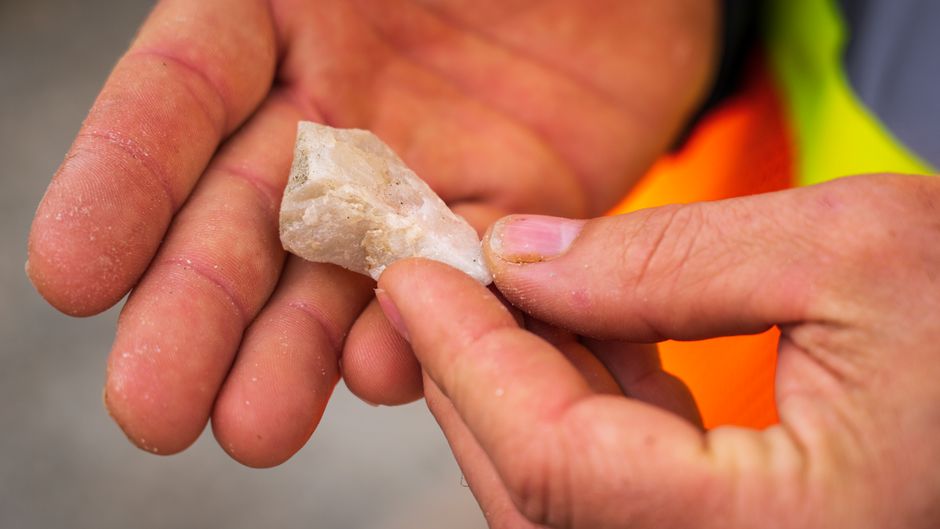
Russian scientists have discovered a previously unknown mineral type named 'Kola ashcroftine' in the Kirovsky mine within the Khibiny massif on the Kola Peninsula. The discovery was made at the Kirovsky mine in the Khibiny massif, according to the press service of the Ministry of Science and Higher Education of the Russian Federation.
The Khibiny massif is considered one of the world's leading regions for mineral diversity and contains the world's largest apatite and nepheline reserves. While classic ashcroftine is known as a pinkish, transparent, and very brittle silicate type, the largest deposits of ashcroftine minerals identified to date have been located in Greenland, Canada, and Italy.
Kola ashcroftine contains yttrium, silicon, potassium, sodium, calcium, manganese, fluorine, and numerous other elements in its crystal structure. Due to this diverse elemental composition, scientists described the mineral as the 'chemical archive of the earth's crust.'
The mineral is noted to have one of the most complex crystal structures known to modern science. The research involved researchers from the Kola Science Center of the Russian Academy of Sciences, St. Petersburg State University, and the A.E. Fersman Mineralogical Museum.
Estimated market value of the mineral's coating per millimeter
The special coating on the rock of the mineral has an estimated market value of approximately 145 USD per millimeter, a price higher than the current price of gold.