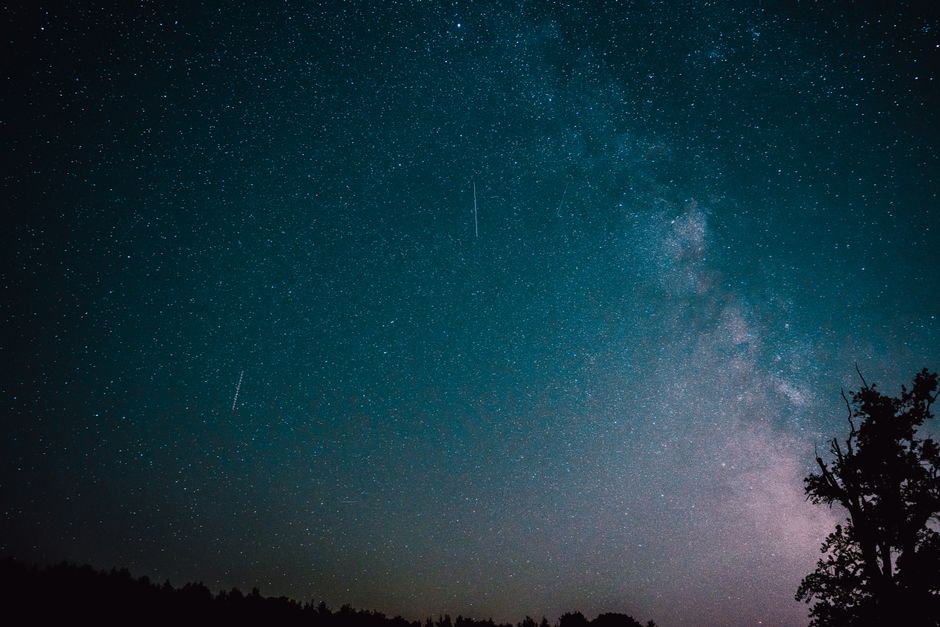
The annual Perseid meteor shower, which began on July 17, will reach its peak on the night of August 13–14. Observers can expect about 100 meteors per hour during the peak, making it among the most intense meteor showers.
Approximately 100 meteors per hour will be visible during the peak of the Perseid meteor shower.
TÜBİTAK Turkey National Observatory stated that this year's observation conditions will be quite favorable thanks to the new moon phase. The moon will be in the new moon phase during the peak, so it will not affect the number of observable meteors.
The Perseid meteor shower lasts from July 17 to August 24. Meteors will appear to radiate from the constellation Perseus. Because the shower continues until August 24, observation programs can take place on different days.
What Causes Meteor Showers?
Meteor showers are formed from debris left by comets, some of which are dated thousands of years ago. Meteors are formed when meteoroids enter Earth's atmosphere at extremely high speeds and burn due to friction. Meteors enter Earth's atmosphere at an average speed of about 60 kilometers per second.
Small rock and dust particles from comet 109P/Swift-Tuttle are the Perseid source.
During the Perseid meteor shower, 'fireballs' can be seen; these are bright meteors with a larger light explosion, observable for a longer time, and can reach a brightness of magnitude -3. This year's most notable meteor shower is the Perseid.
Observation Events and Tips
Many enthusiasts are preparing programs to watch the Perseid meteor shower from areas away from city lights for photography and naked-eye viewing. Individuals can watch meteors anywhere with low light pollution.
On August 8, a meteor observation event will be held for the sixth time at Yeniköy Beach in Karacabey, Bursa, Turkey, by Karacabey Municipality, Cemre Foundation, and bird watcher Alper Tüydeş. In Antalya, Turkey, Patika Nature Hiking Group has started weekend night walks and meteor observation events.
According to the 2026 Sky Events Yearbook of TÜBİTAK Turkey National Observatories, meteor showers occur 8 times a year on Earth. The eight meteor showers are named Quadrantid, Lyrid, Eta Aquarid, Delta Aquarid, Perseid, Orionid, Leonid, and Geminid.