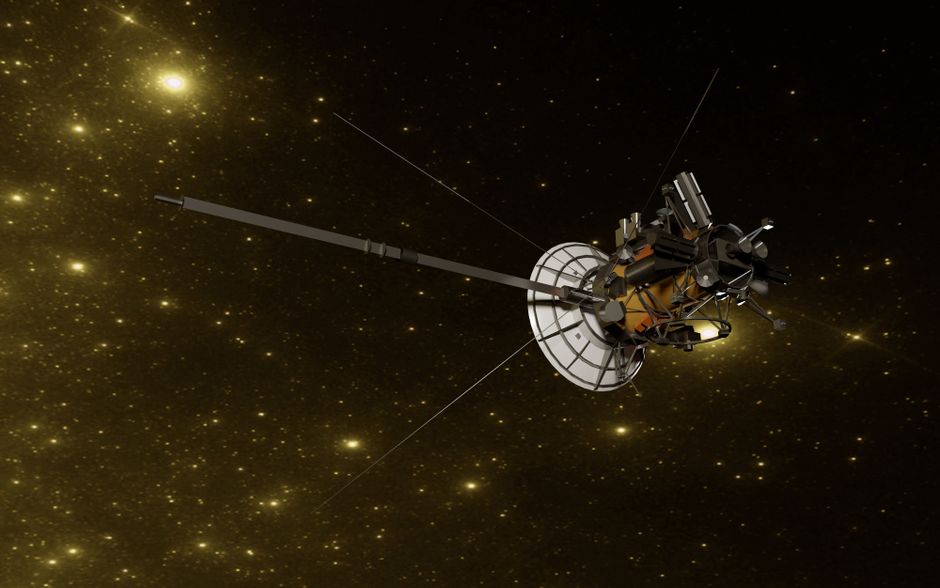
Voyager 2, the only spacecraft to have visited all four gas giants, will keep its remaining scientific instruments operating for at least one more year thanks to a NASA power-saving operation nicknamed 'Big Bang'. The mission, launched in 1977, continues to study the density and temperature of plasma outside the heliosphere since entering interstellar space in 2018, but its power supply is steadily dwindling.
Voyager 2 and its twin, Voyager 1, generate electricity using radioisotope thermoelectric generators (RTGs), which convert heat from decaying plutonium. Each year, the available power drops by approximately 4 watts.
When launched, Voyager 2 carried 10 scientific instruments; now only three remain active. Without the 'Big Bang' measures, NASA would have had to shut down one more instrument before the end of 2026. The operation simultaneously powered down certain energy-hungry components and switched to lower-power alternatives while ensuring the spacecraft stayed warm enough to function.
The same 'Big Bang' power-saving measures are planned for Voyager 1 in the coming months. Voyager 1 currently has two active instruments, while Voyager 2 has three.
Voyager 2 entered interstellar space in 2018 and has been sending back data on plasma density and temperature outside the heliosphere. The spacecraft is now approximately 142 astronomical units (AU) from Earth, about 21.3 billion kilometers. An AU is the average distance between Earth and the Sun, roughly 150 million kilometers. Radio signals take about 19 hours and 48 minutes to reach Voyager 2, and the same time for a response to return.
Voyager 1, farther away at about 171 AU (25.5 billion kilometers), has been in interstellar space since earlier. Signals to it take about 23 hours and 41 minutes each way.
The Voyager missions were originally designed for a four-year tour of the gas giants. Voyager 1 was launched 16 days before Voyager 2 in 1977. Voyager 2's grand tour included flybys of Jupiter in 1979 and all four giant planets by the end of the 1970s.
In 2024, Voyager 1 briefly began transmitting data garbage, raising fears of failure, but it was repaired. Earlier in 2024, NASA shut down one of Voyager 1's instruments due to self-shutdown risk, with possible reactivation if the 'Big Bang' plan succeeded.
The Voyagers have also been reducing their pointing accuracy toward Earth to save energy and limit thruster use. Aboard Voyager 2 is the Golden Record, which includes a greeting in Turkish: 'Sayın Türkçe bilen arkadaşlarımız, sabah şerifleriniz hayır olsun.' The greeting was voiced by Prof. Dr. Peter Ian Kuniholm, an English teacher at Robert College in Istanbul in the 1960s and part of Carl Sagan's team. The record also contains images from Earth, including Jonathan Blair’s photo 'Old man with beard and glasses' from Turkey.
The Voyager program now approaches 50 years of operation; while officially unverified as ten times its original duration, its endurance remains remarkable for spacecraft never designed to last this long.