Amazon's Zoox wins first US approval for paid robotaxis without human controls
NHTSA clears up to 2,500 steering-wheel-free Zoox vehicles per year for commercial ride-hailing, marking a milestone for autonomous taxi services.
Talivio News · Global3 min read
Listen
Aa
T
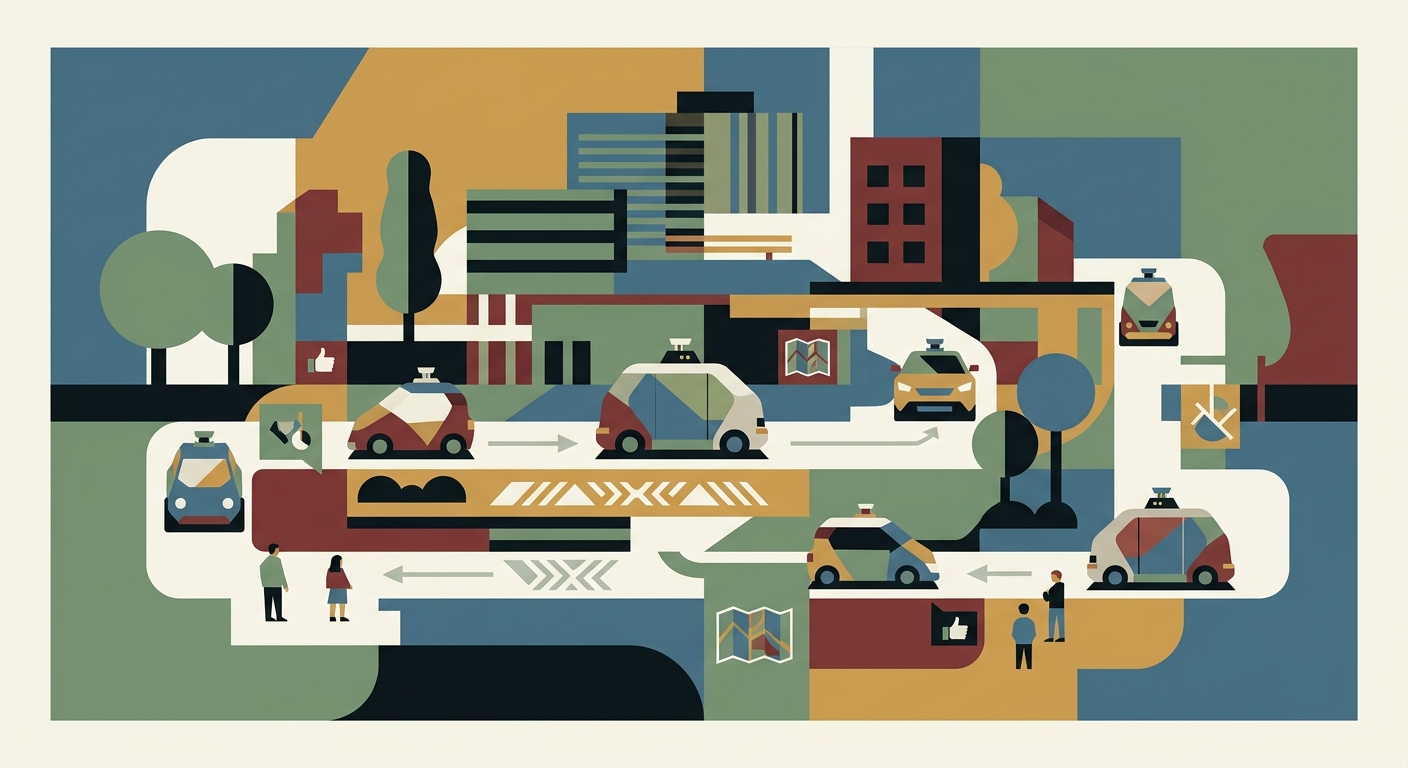
Talivio News (AI illüstrasyon)
Amazon's autonomous vehicle unit Zoox has secured the first US approval to commercially deploy robotaxis without steering wheels or pedals, a milestone for the self-driving ride industry. The National Highway Traffic Safety Administration (NHTSA) granted an exemption from federal motor vehicle safety standards requiring human controls, allowing Zoox to charge customers for rides in its purpose-built electric vehicles.
NHTSA Administrator Jonathan Morrison said Zoox received clearance to commercially deploy up to 2,500 vehicles annually for two years. The exemption covers eight federal motor vehicle safety standards, including those for windshield defrosting and light vehicle braking systems. NHTSA determined the Zoox vehicle is as safe as an equivalent vehicle meeting the waived standards.
According to Zoox, its vehicle is electric, carriage-style, with two rows of inward-facing seats and a top speed of 75 miles per hour. Zoox currently carries passengers in parts of Las Vegas and San Francisco as part of testing. The exemption allows Zoox to charge for rides, subject to state and local approvals, but it cannot sell any of the exempted vehicles to the public.
NHTSA is placing additional reporting requirements on Zoox for issues such as crashes or stopping inappropriately on roads. All remote operators must be located in the United States, and Zoox must publish maps indicating where its vehicles are operating. Morrison added that NHTSA has the ability to pull the exemption if major safety issues arise.
Morrison said NHTSA expects to develop the first federal safety standards for automated driving systems by the end of the Trump administration. The agency is also proposing to overhaul some existing rules written with human drivers in mind, such as requiring brake pedals and rear-view mirrors.
Nearly a year earlier, NHTSA gave Zoox an exemption to demonstrate its robotaxis on public roads and give free rides, but not to charge. After Morrison issued a letter in July telling autonomous vehicle developers to focus on fixing interference with law enforcement and first responders, Zoox recalled its fleet of 105 autonomous vehicles to update software due to potential failure to detect heavy smoke in active emergencies.
Tesla has started producing a Cybercab that lacks human controls but has not outlined its path for regulatory approvals. Meanwhile, NHTSA is reviewing an exemption application from Los Angeles-based startup Robomart for a low-speed driverless vehicle capable of carrying up to 500 pounds of goods. The agency also updated its exemption process to allow automakers to temporarily sell a limited number of non-compliant vehicles for testing new technologies, and is partnering with SAE Industry Technologies Consortia on a three-year, $5 million consortium to accelerate creation of AV performance standards.
Updates
The National Highway Traffic Safety Administration has proposed updating its federal standards to formally eliminate requirements for steering wheels and manual brake pedals in driverless vehicles. Additionally, Zoox recently disclosed that one of its robotaxis entered an active emergency fire scene in Las Vegas last month.
NHTSA has proposed updating its standards to remove requirements for steering wheels and manual brake pedals in driverless vehicles. Additionally, the company disclosed that one of its robotaxis drove into an active emergency fire scene in Las Vegas last month.
The National Highway Traffic Safety Administration has proposed updating federal standards to formally eliminate requirements for steering wheels and manual brake pedals in driverless vehicles. Separately, Zoox disclosed that one of its robotaxis recently drove into an active emergency fire scene in Las Vegas. Jonathan Morrison stated that the agency is taking a balanced approach to regulation by removing barriers to innovation while maintaining enforcement oversight.
NHTSA has proposed updating its standards to remove requirements for steering wheels and manual brake pedals in driverless vehicles. Additionally, the company disclosed that one of its robotaxis drove into an active fire scene in Las Vegas last month.
The NHTSA exemption granted to Zoox further allows the vehicle to bypass specific safety requirements regarding windshield defrosting and light vehicle braking systems. Additionally, the agency is now reviewing a separate exemption application from the startup Robomart for its low-speed driverless delivery vehicle. In a broader regulatory move, the NHTSA has proposed updating federal standards to eliminate requirements for steering wheels and manual brake pedals in autonomous cars and is partnering with the SAE Industry Technologies Consortia on a $5 million, three-year project to establish national performance standards.
The NHTSA exemption for Zoox now extends to specific technical requirements, including waivers for windshield defrosting and light vehicle braking system standards. Furthermore, the agency is partnering with SAE Industry Technologies Consortia on a $5 million, three-year project to establish a single national standard for autonomous vehicle safety. Additionally, the regulator is currently reviewing a separate exemption application from the Los Angeles-based startup Robomart for its low-speed driverless delivery vehicle, with a public comment period to follow.
The NHTSA exemption for Zoox now includes specific waivers from federal standards regarding windshield defrosting and light vehicle braking systems. Additionally, the agency is partnering with SAE Industry Technologies Consortia on a $5 million, three-year project to establish a single national standard for autonomous vehicle safety. Meanwhile, NHTSA is currently reviewing a separate exemption application from the Los Angeles-based startup Robomart for its low-speed driverless delivery vehicle.
The NHTSA exemption for Zoox now includes waivers from standard requirements for windshield defrosting and light vehicle braking systems, while the deployment limit has been clarified as up to 5,000 vehicles over two years. Beyond the regulatory approval, the agency has raised concerns regarding autonomous vehicles interfering with emergency scenes, citing reports that Zoox vehicles have entered active fire sites. Consequently, the NHTSA is launching a three-year, $5 million partnership with the SAE Industry Technologies Consortia to establish unified national safety standards for autonomous driving.
The NHTSA exemption allows Zoox to deploy up to 5,000 robotaxis over two years, doubling the previously reported limit of 2,500 vehicles annually. Beyond standard controls, the exemption also grants relief from specific requirements concerning windshield defrosting and light vehicle braking systems. Meanwhile, the NHTSA has highlighted safety concerns regarding autonomous vehicles interfering with emergency scenes and is partnering with SAE Industry Technologies Consortia on a $5 million project to develop unified national safety standards.
The NHTSA exemption granted to Zoox permits the deployment of up to 5,000 robotaxis over a two-year period, doubling the previously reported annual cap of 2,500. Additionally, the approval includes specific exemptions from federal requirements concerning windshield defrosting and light vehicle braking systems. Amid these developments, NHTSA Administrator Jonathan Morrison expressed safety concerns regarding recent incidents where autonomous vehicles interfered with emergency responders, stating, "To state it bluntly: An AV that cannot safely interact with first responders is a danger to the general public."
The NHTSA exemption now allows Zoox to deploy up to 5,000 robotaxis over a two-year period, double the initial report of 2,500 vehicles per year. Additionally, the exemption grants the company waivers from specific federal safety rules, including requirements for windshield defrosting and standard light vehicle braking systems. Amidst these approvals, NHTSA Administrator Jonathan Morrison has raised concerns regarding the safe interaction of autonomous vehicles with first responders, noting recent incidents where robotaxis entered active emergency scenes or failed to recognize flashing lights and flares.
The NHTSA exemption now allows Zoox to deploy up to 5,000 robotaxis over two years, doubling the previously reported annual capacity of 2,500 units. Additionally, the regulatory approval includes specific exemptions from requirements regarding windshield defrosting and light vehicle braking systems. Meanwhile, the agency has expressed concerns regarding autonomous vehicles interfering with emergency responders, citing past incidents where Zoox and other driverless cars entered active fire scenes or obstructed first responders.
The NHTSA exemption for Zoox has been expanded to allow the deployment of up to 5,000 robotaxis over two years, increasing from the previously reported limit of 2,500 vehicles per year. Additionally, Zoox's government filing reveals the company currently operates 105 active robotaxis.
The NHTSA exemption for Zoox has been expanded to allow the deployment of up to 5,000 robotaxis over two years, increasing the previously reported limit of 2,500 vehicles per year. Additionally, the company's filing indicates it currently operates 105 active robotaxis, and its first paid rides are set to be available in Las Vegas.
The NHTSA exemption for Zoox has been expanded to allow the deployment of up to 5,000 robotaxis over two years, increasing the previously reported capacity of 2,500 vehicles per year. Additionally, the exemption includes specific waivers for requirements regarding windshield defrosting and light vehicle braking systems. Zoox also revealed that its first paid rides will be available in Las Vegas, with expansion plans for Dallas, Phoenix, Austin, and Miami.
The NHTSA exemption for Zoox has been expanded to allow the deployment of up to 5,000 robotaxis over two years, a significant increase from the previously reported limit of 2,500 vehicles per year. Additionally, the exemption specifically includes waivers for rules regarding windshield defrosting and light vehicle braking systems. Zoox also plans to expand its service to Dallas, Phoenix, Austin, and Miami following its initial operations in Las Vegas.
The NHTSA exemption for Zoox has been expanded to allow the deployment of up to 5,000 robotaxis over two years, instead of the previously reported 2,500 vehicles per year. Additionally, the approval includes specific exemptions from regulations requiring windshield defrosting and light vehicle braking systems. Zoox also plans to expand its service beyond its initial Las Vegas launch to include Dallas, Phoenix, Austin, and Miami.
The NHTSA exemption for Zoox has been expanded to allow the deployment of up to 5,000 robotaxis over two years, surpassing the previously reported limit of 2,500 vehicles per year. Additionally, the company's government filing indicates it currently operates 105 active robotaxis, and Zoox has confirmed plans to expand its service to Dallas, Phoenix, Austin, and Miami. Zoox is also currently providing free rides to a limited number of passengers in San Francisco, Austin, and Miami.
NHTSA's exemption for Zoox has been clarified to allow the deployment of up to 5,000 robotaxis over a two-year period, rather than the previously reported 2,500 per year. The approval also includes specific exemptions from regulations requiring windshield defrosting and light vehicle braking systems. Additionally, Zoox has confirmed it will launch its first paid services in Las Vegas, with plans to expand to Dallas, Phoenix, Austin, and Miami.