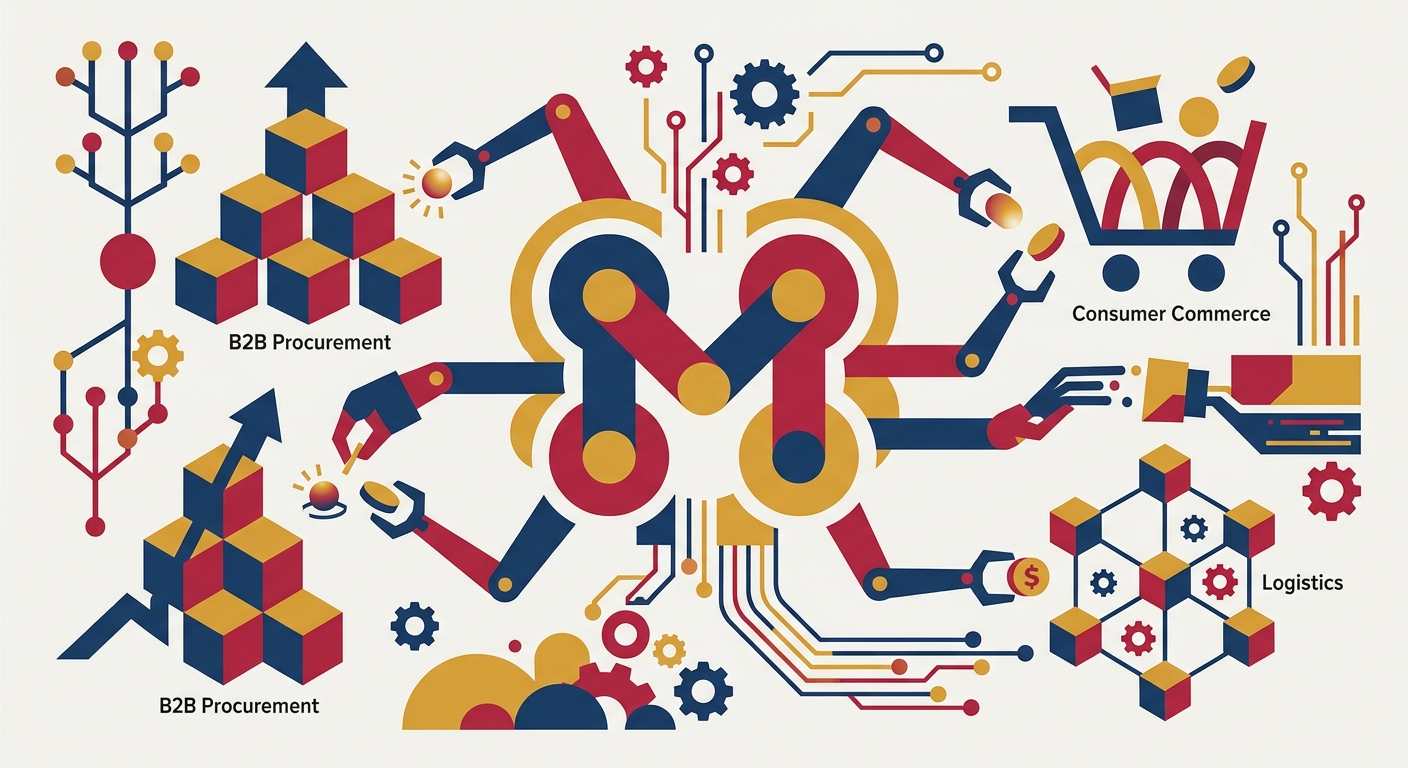
Mastercard is positioning itself for the emerging era of agentic commerce — where AI agents and machines make payments autonomously — by rolling out new platforms, AI models, and stablecoin capabilities. CEO Michael Miebach said the company expects cards to remain central even as payment methods evolve.
The company's push into agentic commerce includes the recently launched Agent Pay for Machines platform, which enables machine-to-machine payments using both traditional currency and digital assets like stablecoins. The platform supports data analysis and blockchain-powered payments, and had more than 30 users at launch, including Adyen, Checkout.com, Coinbase and Cloudflare.
Mastercard's net revenue for the quarter ending June 30, up 12% year over year.
Mastercard reported strong financial results for the quarter ending June 30. Net revenue reached $9.3 billion, up 12% from the prior year, while net income rose 19% to $4.4 billion. Earnings per share were $4.97, beating Zacks Research analyst expectations of $4.77. Gross dollar volume rose 8% to $2.9 trillion, and cross-border payment volume was up 12%. The company raised its full-year outlook, projecting revenue growth in the low teens.
All metrics are trending in the right direction.
Analysts at KeyBanc Capital Markets described the results as "solid top- and bottom-line upside." BofA Global Research noted that card networks are becoming "key beneficiaries instead of disintermediation risks." Visa and American Express have also reported strong earnings recently, citing resilient consumer spending.
AI and Token Innovations
Earlier this year, Mastercard deployed a new AI model in partnership with Nvidia. Miebach said the model can improve the ability to anticipate shifts in consumer behaviors. The company also introduced Agentic Tokens, designed to secure mobile contactless payments, card-on-file transactions, and programmable payments for agentic commerce.
Miebach noted that large technology companies and banks are developing pay-by-bank as a credit card alternative for agentic commerce. He cited Mastercard's scale, data access, product range, and risk management capabilities as key advantages in this space.
Stablecoin Strategy and Regulation
Mastercard sees growing opportunities to embed stablecoins in settlement and cross-border transfers. Miebach said the company believes stablecoins have "great potential" and sees "clear utility for stablecoins in some B2B and P2P flows." Mastercard does not issue its own stablecoin or trade cryptocurrencies, but supports stablecoins and digital assets.
The company recently received a BitLicense from New York's Department of Financial Services, which covers any entity engaging in virtual currency business activity involving New York or a New York resident. Mastercard said the license will help expand its value-added service strategy. Most crypto companies do business in New York, so the BitLicense covers activity both inside and outside the state. Mastercard also acquired stablecoin-technology firm BVNK for $1.8 billion.
It's early days, but engagement across the globe is energizing.