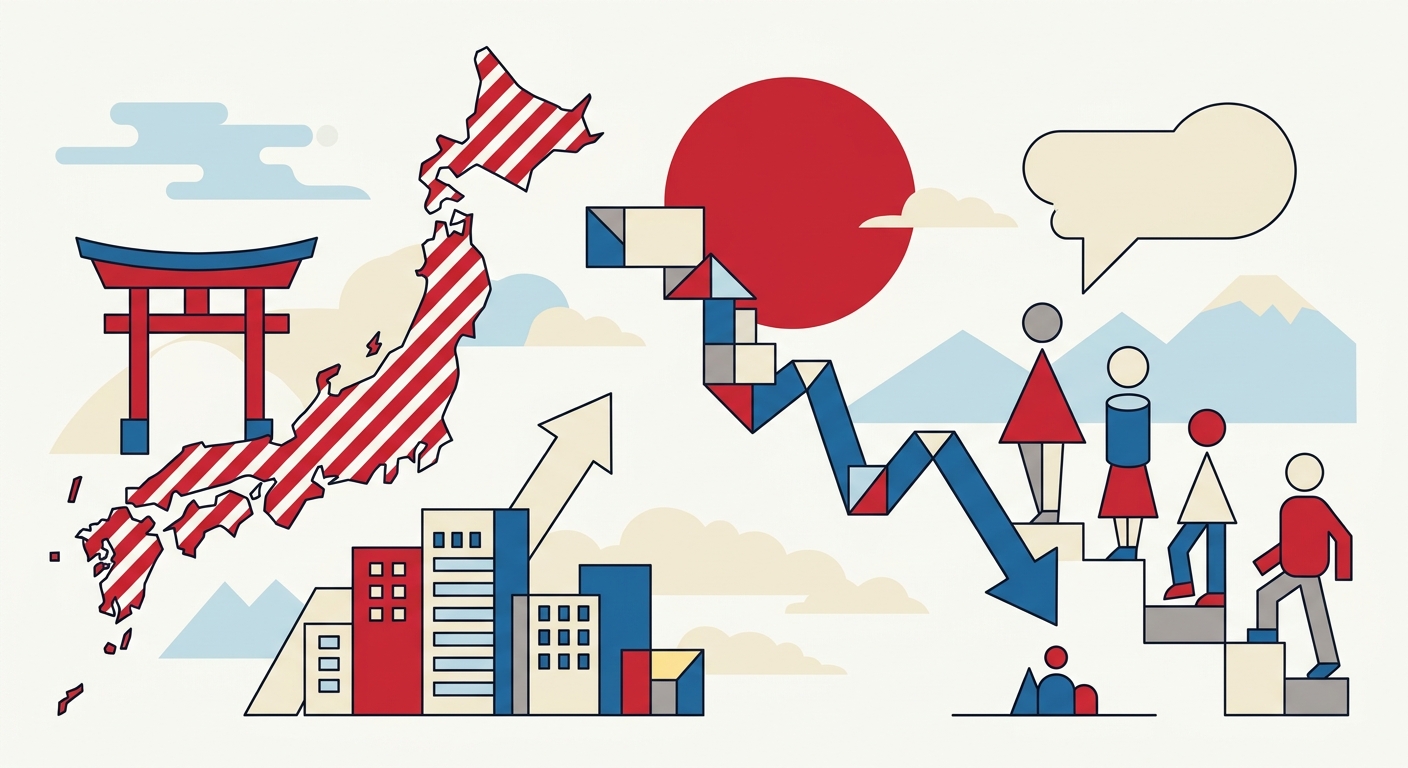
Japan's population of Japanese nationals fell below 120 million for the first time in 42 years, according to government data released on January 1. The number of Japanese residents stood at 119.74 million, a decrease of 0.76% from the previous year and the 17th consecutive annual decline since a peak in 2009.
Largest annual drop in Japanese nationals since records began in 1968.
The decline was driven by a low birth rate and high death rate. The number of babies born fell to just over 670,000, the lowest since records started in 1899, while deaths totaled about 1.59 million. Japan's total fertility rate dropped to a record low of 1.14. The country has a median age of 49.9 years, making it the second-oldest population in the world after Monaco.
The overall population, including foreign residents, was 123.8 million. While Japanese nationals declined, the number of foreign residents rose by 9.62% to a record 4.03 million, an increase of 354,000. Foreign residents are increasingly contributing to the workforce, with working-age individuals accounting for 86.17% of that population.
Regional disparities persist. Tokyo was the only prefecture to see growth in its Japanese population, with a marginal increase of 0.09%. Overall population growth occurred only in Tokyo, Chiba, and Osaka prefectures. Among foreign residents, Hokkaido posted the largest increase at 14.89%, followed by Okinawa and Oita.
Government Response: AI Dating App
In an effort to boost marriage and birth rates, the Tokyo government launched an AI-powered dating app called TOKYO Enmusubi in September 2024. A survey found that about 70% of people interested in marriage were not actively engaging in matchmaking. As of June 30, 2024, the app had 16,000 registered members, selected from about 36,000 applicants, and had resulted in 760 couples in serious relationships.
I met my husband in August and we started a serious relationship in mid-September.