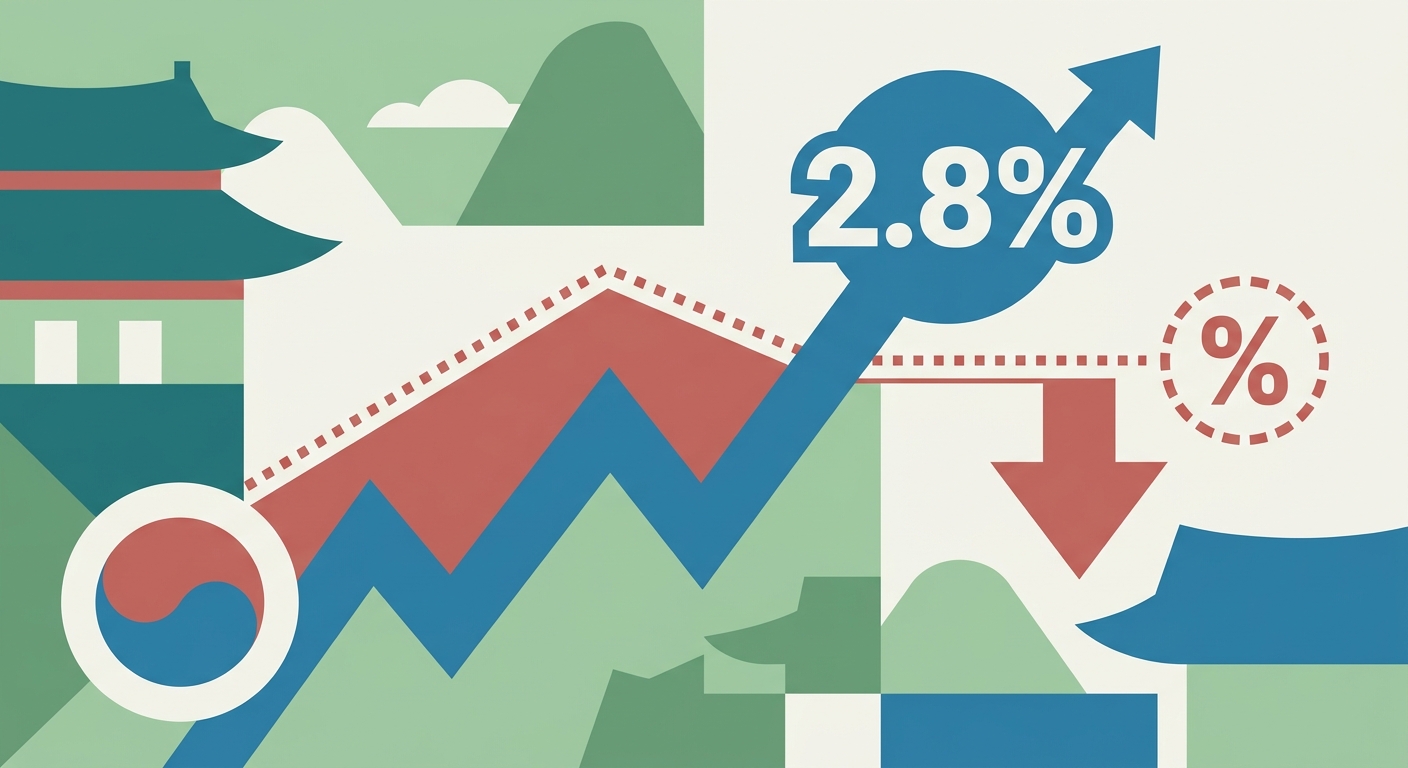
South Korea's consumer inflation weakened to a three-month low in July, coming in below market expectations. The consumer price index rose 2.8% in July from a year earlier, after a 3.2% increase in June. The reading was weaker than the median 3.0% increase tipped in a Reuters poll of economists.
South Korea's consumer price index rose 2.8% in July from a year earlier.
On a monthly basis, the consumer price index fell 0.2% in July, the first decline in eight months. Economists had expected a 0.1% rise, the same pace as the previous month.
Prices of petroleum products dropped 5.5% in July. The finance ministry estimated that nationwide fuel price caps reduced inflation last month by 0.3 percentage points.
Vice Finance Minister Lee Hyoung-il said: 'Upward price pressures, including uncertainty over the Middle East war, persist.' The ministry said that in August a one-off factor would raise inflation by 0.8 percentage points due to base effects of temporary mobile fee discounts last year.
Core consumer prices, which exclude volatile food and energy, rose 2.6% in July from a year earlier, accelerating from a 2.5% increase in June. This was the biggest rise since December 2023.
The data come amid a backdrop of brisk growth in South Korea, Asia's fourth-largest economy, which has fanned inflation risks. The Bank of Korea raised interest rates last month for the first time in three-and-a-half years and flagged more increases to come.
Oil prices fell to three-week lows on Monday after US President Donald Trump held off on a fresh attack on Iran in hope of sealing a quick deal that could boost oil supplies from the Gulf. The inflation data was released by the Ministry of Data and Statistics on Tuesday.