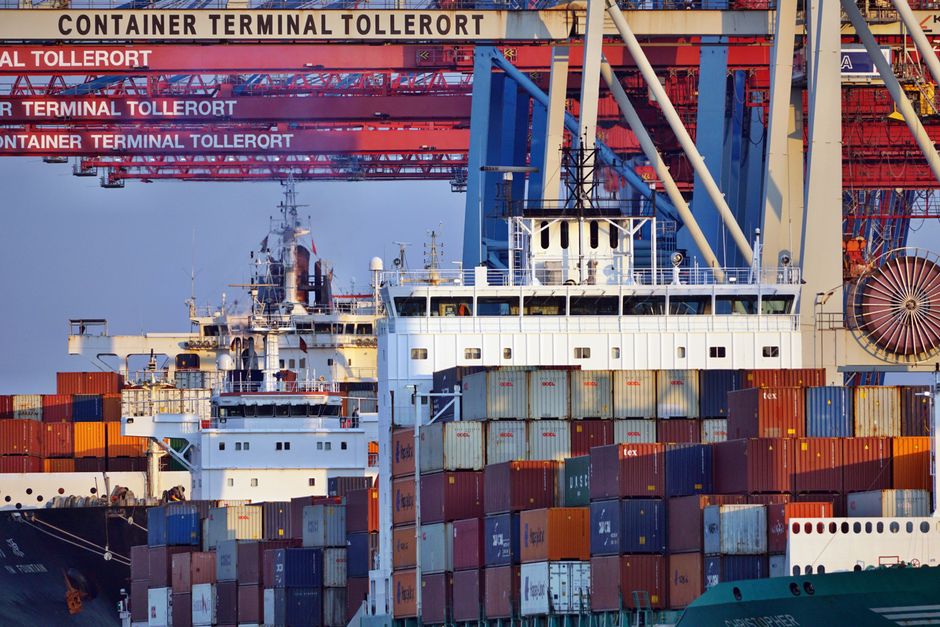
Turkey's foreign trade deficit widened 26.2% year-on-year in June 2026 to $10.370 billion, according to provisional data from the Turkish Statistical Institute (TÜİK) and the Turkish Trade Ministry. The deficit followed $8.218 billion in June 2025.
Under the general trade system, exports rose 21.7% to $24.915 billion and imports rose 23% to $35.285 billion. The export-to-import coverage ratio fell to 70.6% from 71.4% a year earlier.
Turkey's June 2026 foreign trade deficit, up 26.2% from a year earlier.
First-half figures
In January-June 2026, exports rose 3.5% year-on-year to $135.980 billion, while imports rose 4.6% to $189.120 billion. The trade deficit for the period widened 7.4% to $53.140 billion, following $49.460 billion in the first half of 2025. The coverage ratio fell to 71.9% from 72.6%.
Excluding energy and gold
Excluding energy products and non-monetary gold, June exports rose 23.2% to $23.302 billion and imports rose 24.3% to $28.016 billion. The resulting trade deficit was $4.713 billion, and trade volume rose 23.8% to $51.318 billion. The coverage ratio in this category was 83.2%.
Composition of trade
Manufacturing accounted for 93.7% of Turkey's exports in June, while agriculture, forestry and fishing contributed 3.5% and mining and quarrying 2%. On the import side, intermediate goods made up 71.4%, with capital goods and consumer goods each at 14.2%. For the first half of 2026, manufacturing's export share was 93.8%, agriculture 3.7% and mining 1.8%; imports comprised 71.5% intermediate goods, 14% capital goods and 14.1% consumer goods.
Main trading partners
Germany was Turkey's largest export market in June, receiving $1.971 billion, followed by the US ($1.539 billion), Italy ($1.352 billion), the UK ($1.258 billion) and Spain ($1.117 billion). These five accounted for 29% of total exports. On the import side, China was the top source at $5.276 billion, followed by Russia ($3.673 billion), Germany ($2.463 billion), the US ($1.872 billion) and Italy ($1.384 billion); the top five represented 41.6% of imports.
For the first half of 2026, Germany also led export destinations, ahead of the US, the UK, Italy and France. These five made up 29.9% of exports. China was the largest import source at $26.310 billion, followed by Russia, Germany, the US and Switzerland, together accounting for 41.1% of imports.
Adjusted data and technology intensity
Seasonally and calendar-adjusted data show June exports fell 1.8% month-on-month, while imports rose 7.1%. Calendar-adjusted year-on-year growth was 7.9% for exports and 8.7% for imports. High-technology products accounted for 4.4% of manufacturing exports and 12.1% of manufacturing imports in June; for the first half, the shares were 3.5% and 12%, respectively.
Special Trade System figures
Under the Special Trade System, June exports rose 23.8% to $22.720 billion and imports rose 27.1% to $33.193 billion, resulting in a deficit of $10.473 billion and a coverage ratio of 68.4%. For January-June, exports rose 4.4% to $124.604 billion and imports rose 5.9% to $178.777 billion, with the deficit at $54.173 billion and the coverage ratio at 69.7%.
Turkey recorded its highest-ever June export value and the third-highest monthly export total.
Trade Minister Omer Bolat also said annualized exports rose 4.1% year-on-year to $277.9 billion as of June, up from $266.9 billion a year earlier. He added that Turkey will continue working to exceed the Medium-Term Program's export target of $282 billion despite geopolitical tensions, protectionist measures and weak external demand.
Bolat noted that exports of medium-high- and high-technology products increased 8.4% in the first half of 2026 to $56.2 billion.